Back to Learning Center
Blog
Specialty tag(s): Pre-Divorce Guidance, Divorce
What Is a Final Divorce Decree, and How Long Does It Take To Get One?
Jack Wall | September 24, 2026
![Asian women sitting on couch, looking at papers]()
A divorce decree is a legally binding document that finalizes a divorce. It lays out the rights and responsibilities of both spouses after the divorce and contains final resolutions on key matters like visitation, child support, and property division. It also includes standard provisions found in almost every decree, such as those regarding the court’s jurisdiction and how court costs will be paid.
The decree is the most important document in a Texas divorce case. It is the way one achieves a desirable outcome. The end goal is to have a divorce decree that says the things one wants it to say. Because this document is so important, one must understand what it should look like, how long it takes to get one, and what makes it different from other documents. This article will explore these matters.
What Does a Divorce Decree Include?
A Texas divorce decree includes several specific matters:
- Division of assets and debts: how property, accounts, and liabilities are divided between spouses.
- Spousal maintenance and child support: whether either applies, and in what amount.
- Child custody, visitation, and the parenting schedule: where children live and how time is divided between parents.
- Name change: authorization for a spouse to resume a former or maiden name.
What Does a Divorce Decree Look Like?
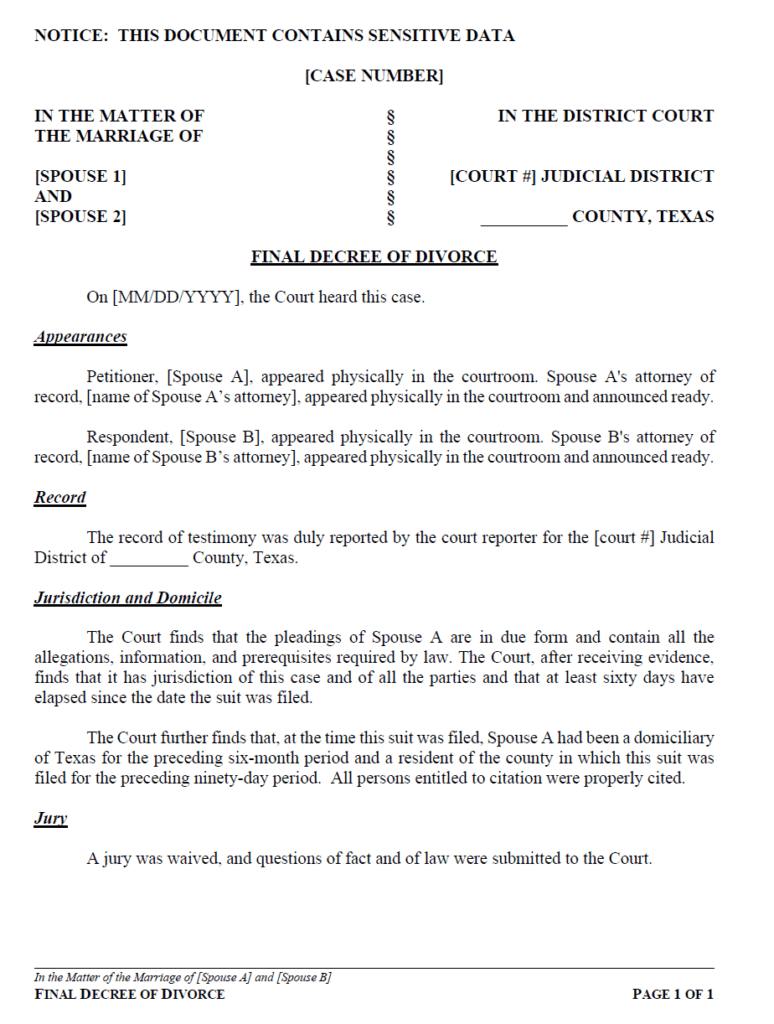
Here is what the first page of a divorce decree typically looks like:
Although the exact format varies, a standard divorce decree will include the court’s name, the case number, the spouses’ names, and, at the end, the judge’s signature. Although not shown in this picture, important provisions like parental rights, visitation, and child support will also appear.
How Long Does It Take To Get a Divorce Decree?
In Texas, a court can’t finalize a divorce until at least 60 days after the petition is filed, under Texas Family Code § 6.702 — with a narrow exception when the case involves family violence. An uncontested divorce, or one resolved through negotiated agreement, is often finalized shortly after that 60-day mark. A contested case, where a judge decides the terms, commonly takes anywhere from several months to over a year.
Once spouses reach an agreement on the terms of their divorce, the attorneys can begin drafting a decree that memorializes the terms of the agreement. The decree itself takes effect once the judge signs it.
If spouses cannot agree to the terms of their divorce, then a judge will have to decide the terms after a final trial. Spouses who need a judge to decide their terms typically wait longer than those who reach an agreement. It takes a significant amount of time to prepare for trial, attend trial, and wait for a judge’s ruling. Once the judge makes a ruling, the spouses’ attorneys will draft a decree that memorializes it. For a closer look at each stage along the way, see our guide to the basic steps in a Texas divorce, and our roundup of Texas divorce forms and resources.
Difference Between a Divorce Decree and a Divorce Certificate
A divorce decree is a comprehensive court order detailing the terms of the divorce. A divorce certificate, by contrast, is a governmental record that only confirms a divorce happened, usually issued by a vital records office, rather than the court itself.
The divorce certificate does not contain the terms of the divorce. It only includes basic information, such as the names of the spouses and the date of divorce. It is commonly used for administrative purposes, such as updating marital status on official documents.
How to Find My Divorce Decree
In Texas, a certified copy of your decree comes from the district clerk in the county where your divorce was granted — not from the state. Some allow you to make an online request for it. Others require you to go there in person. Either way, you will likely need to provide identification to verify your identity.
If you only need to confirm that a divorce is on record — for example, for an administrative form — Texas DSHS Vital Statistics can issue a verification letter, but it isn’t a certified copy of the decree and can’t substitute for one.
What If My Ex Doesn’t Comply, or My Circumstances Change?
If your former spouse isn’t following the terms of your decree, enforcement is the remedy. Texas courts can compel compliance with missed support payments, blocked visitation, and similar violations. An attorney can help you pursue that route. Parts of a decree, including custody, visitation, and support, can also be modified in Texas when there’s been a material and substantial change in circumstances, such as a job loss, a relocation, or a shift in a child’s needs. Our Modification & Enforcement team can help you understand which option applies to your situation.
Speak With an Experienced Attorney for Help With Your Divorce Decree
If you are pursuing a divorce and need assistance, Goranson Bain Ausley is here to help. Our team of experienced family law attorneys can guide you through the process. Contact us today to schedule your consultation.