Services to Help Solve Your Challenges
Our attorneys are experienced in all aspects of family law and will guide you through each step of the process, ensuring you have the information you need to make wise decisions and prepare for the future.

Specialty tag(s): Divorce Coaching, Divorce for Men, Divorce for Women
Eric Robertson | December 12, 2025

Key Takeaways
Divorce can be one of the most emotionally charged experiences a person will ever face. When trust is broken or deep hurt occurs, it’s natural to feel anger, betrayal, and even a desire for revenge. However, letting that desire dictate your decisions can turn an already painful process into something far worse—emotionally, financially, and legally. While it may feel satisfying in the short term, revenge almost always backfires in the long run.
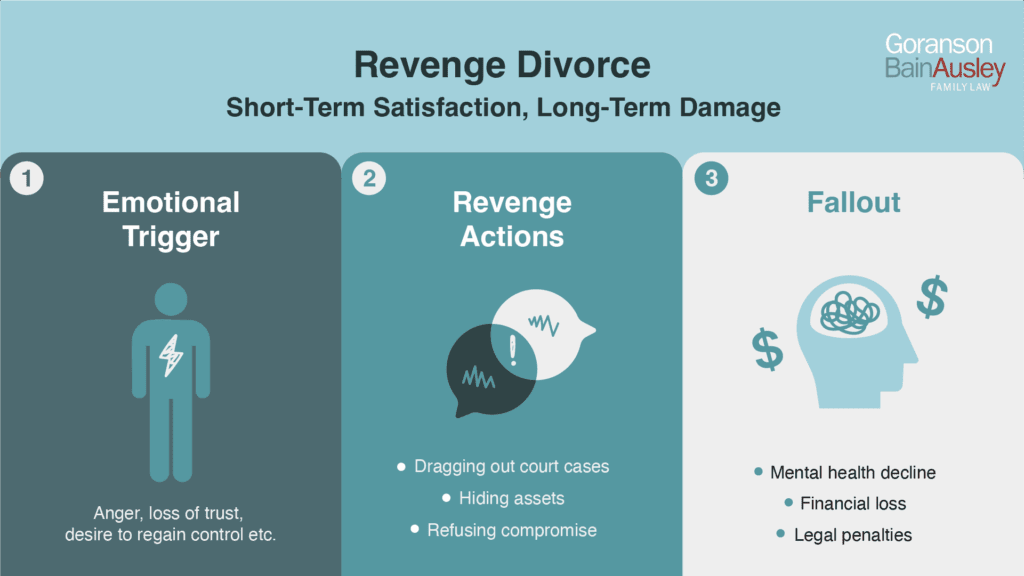
At its core, revenge is about trying to balance the scales—to make the other person hurt as much as you do. Unfortunately, that emotional drive keeps you locked in conflict instead of healing. Revenge in divorce tends to prolong emotional attachment and emotional pain, rather than providing closure. Divorce is already a major source of stress, and pursuing vengeance only intensifies that burden. Psychologists note that holding onto anger prolongs emotional pain, fuels anxiety, and makes it harder to move forward.
When you focus on “winning” the divorce, you may become consumed by monitoring your ex’s every move or reliving past grievances. This creates a feedback loop of stress hormones such as cortisol and adrenaline, which can lead to insomnia, headaches, high blood pressure, and weakened immunity. Over time, bitterness can evolve into depression or chronic anxiety, both of which can hinder recovery and strain relationships with children, friends, and family.
Another mental health risk is the loss of self-identity. When your energy centers on punishing your ex, your own healing and growth take a back seat. Instead of redefining your life, you remain tied to the marriage emotionally—long after the legal ties are broken. True healing requires acceptance, boundaries, and self-care, not retaliation.
Therapists often encourage divorcing individuals to view the process as a transition, not a battle. Understanding the mental health impact of revenge in divorce helps clients focus on healing rather than retaliation. Support groups, counseling, mindfulness, and focusing on future goals can provide healthier ways to process pain. Letting go of revenge doesn’t mean forgiving overnight or excusing past wrongs—it simply means choosing peace over prolonged suffering.
Revenge can also be devastating to your financial health. Divorce is already expensive, and vindictive behavior tends to multiply costs. For example, if one spouse drags out proceedings to “punish” the other, attorney fees, court appearances, and mediation sessions quickly add up. Every extra motion or delay can cost thousands of dollars, often leaving both parties with significantly fewer resources to rebuild their lives.
Some individuals engage in financially destructive behaviors, such as hiding assets, quitting a job to reduce support payments, or spending excessively to deprive the other spouse of marital funds. These tactics can lead to serious legal consequences, including sanctions, fines, or an unfavorable judgment from the court. Courts often penalize revenge in divorce because it undermines cooperation and transparency. Judges typically frown upon vindictive actions and may award greater financial compensation to the spouse who remains cooperative and transparent.
Revenge-based decisions also undermine long-term financial stability. For example, insisting on keeping the marital home to spite your ex might leave you with an unmanageable mortgage, taxes, and maintenance costs. Similarly, refusing to negotiate fairly over retirement accounts or child support could harm your children’s financial well-being and your own future security.
In contrast, focusing on practical, forward-thinking decisions helps both parties achieve financial closure and stability. Divorce settlements that prioritize fairness and sustainability—rather than punishment—tend to protect assets, reduce stress, and allow both individuals to start rebuilding sooner.
Ultimately, revenge offers an illusion of control in a situation defined by loss. It may give a fleeting sense of satisfaction, but it does nothing to promote real healing or future security. A peaceful, cooperative approach—however difficult at first—protects both your mental health and your finances.
Divorce is not just the end of a relationship; it’s the beginning of a new chapter. By focusing on personal growth, emotional recovery, and sound financial decisions, you can emerge from the process stronger, wiser, and ready to move forward. Choosing understanding over vengeance doesn’t mean you were weak—it means you were strong enough to prioritize your peace of mind and your future.
One of the most important decisions you’ll make during divorce is who represents you. The attorney you choose can either guide you toward resolution or fuel unnecessary conflict. Some lawyers may promise to “fight for you” in ways that sound empowering but ultimately prolong hostility and drain your resources. Others take a balanced approach—protecting your rights without escalating the emotional warfare.
A good divorce attorney should be both compassionate and strategic. They should listen carefully to your goals, explain the legal process clearly, and encourage choices that preserve your financial and emotional stability. Ask potential lawyers about their philosophy toward conflict resolution and whether they promote mediation or Collaborative Divorce options.
Remember, your attorney is not there to take revenge on your behalf—they’re there to help you transition into the next stage of your life with fairness and dignity. Choosing wisely can mean the difference between years of bitterness tied to revenge in divorce and a future built on peace, healing, and renewed purpose.
If you want to learn more about options for a constructive approach to divorce, please contact us at 877-219-8299 to schedule a consultation.
Our attorneys are experienced in all aspects of family law and will guide you through each step of the process, ensuring you have the information you need to make wise decisions and prepare for the future.
At Goranson Bain Ausley, we strive to deliver clarity about what comes next and confidence that you and your family’s future are more secure. Contact our team and discover how we can help you.

Facing divorce or family law issues? Don’t navigate alone. Email us to schedule a consultation.

When you need to speak to a top divorce lawyer, call us to schedule a consultation.